One day, your apartment listing is near the top of Google’s search results page. The next day, it drops, and you’re not sure why. It’s all part of search engine optimization (SEO).
SEO is how you help your listing appear when people search for rentals online. It’s the work you do to make your website and listings easier for search engines to understand, so renters can find you more easily. For multifamily marketers, where your listing appears on a search page is more than numbers on a chart. They are early warning signs. They can show when competition increases, when content gets outdated, or when search engines change how they rank pages.
This playbook breaks down what search engine ranking changes really mean and what to do when you see them. You’ll learn how to spot useful signals, avoid overreacting to normal movement, and take smart action when it matters. We’ll also walk through common ranking scenarios using a visual framework you can come back to anytime.

Understanding apartment ranking shifts: what they signal, and why they matter
Changes in where your apartment listing is ranked in a web search are not random. Almost every shift has a reason. Instead of reacting to every movement, it helps to think in three steps: cause, reaction, and action.
Common causes include:
- Google algorithm updates (Google makes thousands of updates every year)
- New competitors entering the market
- Technical website issues
- Outdated content
- Lost or weaker backlinks
Small daily changes, like one or two spots, are normal. Rankings can change based on location, time of day, and search behavior.
These shifts are not a problem on their own. What matters is patterns over time. When rankings move steadily or drop across multiple listings, that’s a flag worth paying attention to.
Your playbook: interpreting and responding to ranking changes
Understanding changes to your search engine ranking starts with separating what happened from what it means, and then knowing how to act.
How to Read the Signals
- Cause: The event or condition that triggered the change.
- Reaction: What you see in rankings or traffic. This often shows up before leads or conversions decline, acting as an early warning signal.
- Plan of Action: Next steps to protect visibility, recover rankings, or make the most of positive momentum.
Common Ranking Signals
Scenario 1: New Competition Enters the Market
- Cause: A new multifamily community launches nearby or an existing competitor upgrades their digital presence.
- Reaction: Your listing drops a few positions.
- Plan of Action: Refresh your listing content, update photos, and improve keyword focus. Small improvements can quickly reclaim lost ground.
Scenario 2: Technical Issue on Your Site
- Cause: Slow page load, broken links, mobile issues, or crawl errors prevent search engines from fully accessing your content.
- Reaction: Rankings fluctuate or fall suddenly.
- Plan of Action: Run a site audit, fix errors, and request reindexing so search engines can reassess your page.
Scenario 3: Content Decay Over Time
- Cause: Old descriptions, outdated amenities, or stale language that doesn’t reflect the current property.
- Reaction: Slow, steady decline in ranking, often without a clear break point.
- Plan of Action: Rewrite content, update amenities, and improve page relevance by aligning pages with renter search intent.
Scenario 4: Algorithm Update
- Cause: Google frequently changes how it evaluates content, relevance, and user experience.
- Reaction: Older pages drop more than newer ones, even if traffic was previously stable.
- Plan of Action: Refresh priority pages, improve clarity and structure, and ensure content uses current SEO best practices.
Scenario 5: Strong Optimization Pays Off
- Cause: Content updates, technical fixes, and SEO improvements.
- Reaction: Listing ranks in the top three, driving higher visibility and stronger engagement.
- Plan of Action: Maximize value with strong photos, calls to action, and conversion elements to convert visibility into signed leases.
Tools like PERQ’s AI Ranking Tracker help identify these changes early (before traffic drops show up in analytics).
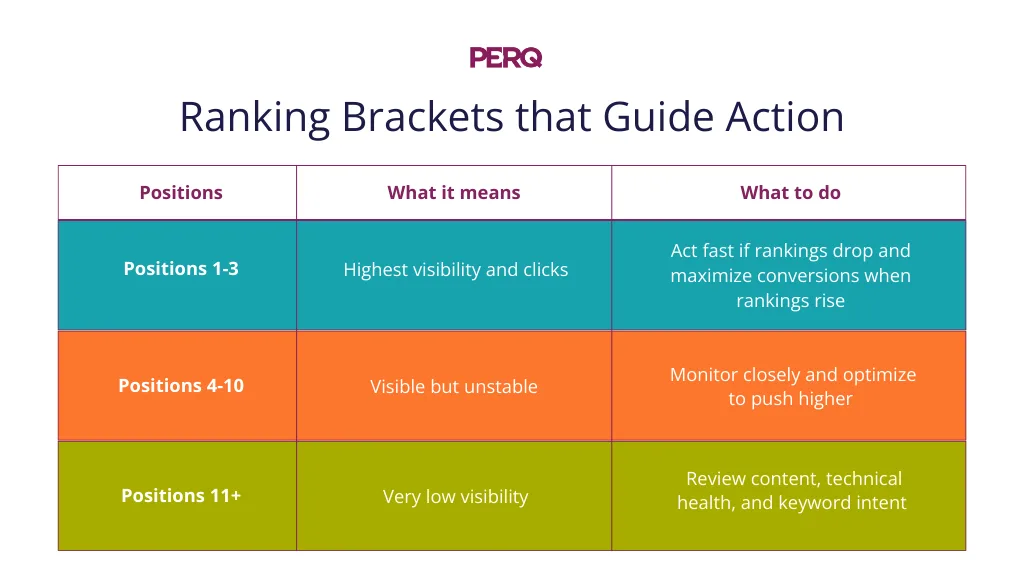
Ranking brackets that guide action
Where your apartment listings show up in search tells you what to fix, improve, or optimize.
Positions 1-3
- What it means: Your apartment shows up at the very top of search results. Most people click these spots first, so this is how you get the most views and traffic.
- What to do: Pay close attention. If your ranking drops, fix the issue quickly so you don’t lose visibility. When your ranking is strong, focus on turning clicks into tours and applications.
Positions 4-10
- What it means: Your listing is visible, but not at the top. People can still find you, although they may click listings above yours instead.
- What to do: Small improvements, like better photos, clearer descriptions, or updated details, can help move your listing higher.
Positions 11+
- What it means: Your listing is hard to find. Most searchers won’t scroll this far, so fewer people will see your listing.
- What to do: Take a step back and review the basics. Check your listing content, make sure your site is working, and confirm you’re using the words renters are searching for.
Organic ranking fundamentals for your apartment website
Organic rankings show where your pages appear in unpaid search results (directly below the “sponsored” links). One page can rank for many keywords, but it’s best to focus on one or two main terms per listing. This helps search engines understand what your page is about and makes it easier to track performance clearly.
CTR: Why one position makes a big difference
Your ranking strongly affects your click-through rate (CTR). Your CTR is the percentage of people who see your listing or ad and actually click on it. The top search result gets about 30% of clicks. The second result drops to about 15%. By position ten, clicks fall below 1%.
That means a small drop in where your listing appears in search results can lead to fewer tours, fewer leads, and fewer leases. Moving from position three to five may not seem major, but it can cut your traffic in half.
For multifamily marketers, rankings are closely tied to revenue. Strong rankings help keep your community visible when renters are actively searching. That’s why protecting high positions (and pushing listings up even one spot) can deliver real business value.
How SERP features are reshaping apartment SEO
Search results today are more crowded than ever. The search engine results page (SERP) is the page you see after typing a search into Google. Along with regular listings, renters now see maps, featured answers, AI-generated responses, images, and “People Also Ask” boxes at the top of the page.
These features often appear before organic results, bumping listings farther down the screen. Even if your ranking number stays the same, your listing may get fewer clicks simply because it’s harder to see. Google handles over 90% of searches, but millions of people use other search engines like Bing and DuckDuckGo, and each one shows search results a little differently.
That’s why rankings are only part of the story. Marketers also need to watch how the search results page itself is changing. Tracking rankings alongside SERP features helps explain why traffic might drop or why a listing performs better even without a big ranking jump.
Why apartment rankings are different from evergreen SEO
Apartment listings are not long-term content. They change as often as availability, pricing, and amenities update. Some pages may only be live for a few months. Because of this, multifamily SEO needs faster response times than evergreen blog content. Waiting weeks to react can mean missing your window to compete.
Ranking data gives marketers quick signals while listings are still active. It helps teams know when to refresh content, adjust strategy, or shift focus before a listing loses visibility during its most important leasing period.
Apartment SEO rankings are more than a vanity metric
It’s easy to think of rankings as a “nice to have” number. But when tracked over time, rankings act like early warning lights.
A steady drop often shows up in rankings before traffic declines. It may point to outdated content, new competitors, or technical problems that haven’t fully impacted performance yet. In this way, rankings work like smoke before a fire. They give marketers time to investigate and fix issues early, when changes are faster, easier, and less costly.
How marketers can use search engine ranking data to drive SEO strategy
The most effective teams use ranking data to guide decisions, not react emotionally. Instead of panicking over daily movement, they look for patterns that point to real opportunities or risks.
The results can be significant. One multifamily organization saw a 145% improvement in traffic-to-lead conversion and a 181% increase in leads after refreshing their website and SEO strategy.
Strategic teams use search engine rankings to:
- Catch content decay early before traffic drops
- Spot new competitors as soon as they appear
- See rising keywords and topics renters care about
- Prioritize high-impact listings first
- Track trends across multiple properties, not just one
Tools like PERQ’s AI Ranking Tracker make this easier by turning ranking changes into actionable signals so teams can act quickly and confidently without extra manual work.